KiyaKite Club te ofrece la mejor opción en lecciones de Kiteboarding / Kitesurfing. David Ibern, Instructor Nivel II certificado por la IKO, (International Kiteboarding Organization) enseña y surpervisa bajo los estandares de enseñanza IKO.
El programa IKO de enseñanza es el mejor y mas completo que puedas encontrar. Nuestro objetivo es tu DIVERSIÓN mientras aprendes Kiteboarding / Kitesurfing en un entorno seguro. Todos los estudiantes reciben al final del curso una Credencial de Certificación IKO por el nivel alcanzando.

KiyaKite Club offers you the best option in lessons of Kite boarding / Kite surfing. David Ibern, Instructor Level II certified by the IKO (International Kite boarding Organization) teaches and supervises under IKO teaching standards. IKO teaching program is the best and most complete you can find. Our goal is for you to have FUN while you learn Kite boarding / Kite surfing in a safe environment. All students receive at the end of the course an IKO certification credential for the level achieved.

Kitesurfing Barranquilla/Pto Colombia - Atlántico - Colombia - Sur América

INFO KIYAKITE


Celular: 310 727 1110

E-mail: kiyakite@hotmail.es

Dirección: Calle 2 No. 22 - 14 Prado Mar - Puerto Colombia
Mostrando entradas con la etiqueta curso. Mostrar todas las entradas

sábado, 13 de marzo de 2010

KITE SIMULATOR

Aqui una distracción pa mientras...

- No se mueve ni una hoja
- Está lloviendo
- Estas que te metes a la ducha con la cometa
- Mucho trabajo en la oficina y necesitas algo que inmediatamante te lleve un ratico a la playa
- Mostrar a un amigo porque te desaparesiste los fines de semana
- Visualizar movimiento de cometa en jugada o movimiento al que quieres llegar

... o lo que se te ocurra

un simulador de un CKite en su ventana de viento, cacharreenlo que tiene para cambiar desde el color de la cometa, el periodo de racha de viento, el largo de lineas y hasta relaunch!!
Si algun Ing. electrónico se le mide para crear una interfase en forma de barra para controlar el programa me avisa que voy pa ESA!

Ahora si ... el LINK:

http://www.flysim.com/kitesim/kitesim_download.html


¡¡VIENTOS PRÓSPEROS!!

jueves, 4 de marzo de 2010

CURSO DE KITESURFING EN IMÁGENES

1. SEGURIDAD EN LA PLAYA
2. TEORIA DE VIENTO

3. VENTANA DE VIENTO


4. PRIMER VUELO DE TRAINER (ENTENDER VENTANA DE VIENTO)


5. PREPARACION Y ALISTAMIENTO DE TRAINER


6. VUELO DE TRAINER CON LINEAS


7. ANATOMIA DEL EQUIPO DEL KITE DE 4 LINEAS Y ALISTAMIENTO


8. ENTENDIENDO EL VUELO DEL KITE DE 4 LINEAS


9. ASISTENTE DESPEGUE Y ATERRIZAJE


10. CONTROL DE BARRA DEL KITE


11. ACTIVAR LOS SISTEMAS DE SEGURIDAD


12. CONTROL DE LA VENTANA DE VIENTO CON KITE Y POSICION DE CUERPO


13. MANEJO DEL KITE CON UNA MANO


14. ATERRIZAJE Y DESPEGUE DEL KITE

15. AUTORESCATE


16. SEÑALES INTERNACIONALES


17. PRIMERA ENTRADA AL AGUA Y BODYDRAGGING (arrastre de cuerpo en agua)


18. ORZAR CON EL CUERPO (recuperación de tabla)


19. BOARD-DRAGGING (deslizarse con tabla en la mano)

20. PRATICA DE POSTURA DE TABLA EN TIERRA


21. ENTRADA INDEPENDIENTE AL AGUA


22. WATERSTART (levantarse en la tabla y correr en ambas direcciones)


¡NOS VEMOS EN EL AGUA!
MAS INFORMACIÓN:
CEL: 310 727 1110

lunes, 8 de febrero de 2010

PAQUETES Y COMBOS KIYAKITESURFING

PAQUETES NUEVOS

KAHOONA V1 9.5m + BARRA REDLINE + TABLA 2010 SPARK 140cm + BEST HARNESS + INSTRUCCION KITESURFING 8 HORAS


2010 WAROO 9m + BARRA BEST + TABLA 2010 SPARK 140cm + BEST HARNESS + INSTRUCCION KITESURFING 8 HORAS

PAQUETES USADOS


2009 WAROO 9m (usado 10 horas) + BARRA BEST (NUEVA) + TABLA 2009 SPARK (de 2da)+ BEST WAIST HARNESS (NUEVO) + INTRUCCION KITESURFING 4 HORAS

INFORMES:
cel (057)310 727 1110

lunes, 31 de agosto de 2009

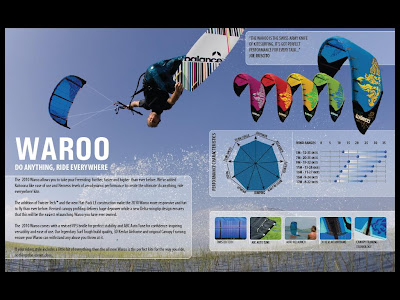
BESTKITEBOARDING WAROO 2010

LANZAMIENTO MUNDIAL DE la nueva Waroo de la marca Best Kiteboarding, cambio total!!!


Figura Delta en las puntas, punto de tosión Twister Tech e inflado de un solo punto EZ-PUMP.


LA MEJOR TODO TERRENO DIPONIBLE @ KIYAKITEBOARDING!!


martes, 23 de junio de 2009

TRAVESIA INTERNACIONAL DE KITESURF

La travesía deportiva más emocionante y con mas acción que se realizará en Colombia en los últimos tiempos reuniendo A los mejores riders a nivel internacional.
Una increíble exhibición de fuerza, agilidad y destreza en un recorrido de 100 millas náuticas en las zonas mas excitantes de la Guajira.

Descripción:

Inscripción: 100USD
Guía de actividades,
Hidratación,
Transporte terrestre,
Bienvenida y clausura.
Lycra
Seguro Medico durante los días del evento
Fabulosos premios.

Hospedaje y comidas por un costo de: 150USD 03 noches/ 04 días( Los hospedajes son sitios típicos durmiendo en Chinchorro, en caso de querer alternativa con cama, comunicarse con nosotros)
Este evento deportivo se encuentra compuesto por dos tipos de actividades:

a) Travesía Estarán divididas en tres partes 100 millas náuticas:

Ruta 1: Punta Gallinas- Cabo de la Vela (38 millas)

Ruta 2: El Cabo de la Vela – Manaure ( 30 millas)

Ruta 3: Manaure- Rio hacha (32 millas)


b) Eventos sociales:

Día 1: Viernes 17 de Julio 2009

- Encuentro de los participantes, medios de comunicación, representantes internacionales de los países: Colombia, Venezuela, Aruba, España, Brasil y Argentina en Riohacha. Welcome drink. Entrega de material publicitario, filmación en TV.

-Traslado terrestre en camionetas 05 horas de trayectoria hasta llegar a Punta Gallinas

- Bienvenida a Punta Gallina con Cena típica. ( Mariscos)

- Baile Cultural Wayuu ( Grupo Indígena) Punta GallinasEncuentro social donde estarán presentes todos los participantes con sus familiares, aficionados, y representantes internacionales, comida y bebidas tropicales. Esta es la oportunidad para nuestros patrocinantes de tener una proyección más amplia entre los participantes del evento.

- Chinchorros para dormir.


Día 2: Sábado 18 de Julio 2009

Salida aprox. 9:00 AM ( sujeto a cambios, con variables del viento)Lanchas de seguridad como guía.

Salida 1: inicia la competencia con jueces que determinarán los tiempos de salida y llegada.Simultáneamente equipo de producción de Medios de TV filmando a los riders, en el trayecto.

Al llegar al destino: Cabo de la Vela serán recibidos por los jueces y equipo de producción.

Bienvenida con comidas típicas en el Cabo de la Vela.

Exhibición de Freestyle de los Riders con iluminación y musica para proyección de comunicación.


Día 3: Domingo 19 de Julio 2009

Salida aprox. 9:00 AM ( sujeto a cambios, con variables del viento)

Salida 2: se reactivan los tiempos para la segunda travesía.Al llegar a Manaure los participantes serán recibidos por nuestro equipo de producción y jueces.

Cena típica: Mariscos, Fiesta animada en Manaure Beach, Sitio perfecto para bailar, y compartir de los elementos naturales de Manaure, con Cócteles tropicales, juegos interactivos entres los participantes de los diferentes países.

Exhibición nocturna de kitesurf, despliegue de comunicación.

Día4: Lunes 20 de Julio- Premiación - Entrega de trofeos y palabras de los representantes de las empresas patrocinantes del evento. Presencia de medios. Clausura.

jueves, 28 de mayo de 2009

Busquemos al Viento...Kite Trip!!!!


Se nos fue la temporada de viento 2008-2009, ahora el reporte y el estar pendiente del viento y el clima se vuelve muy importante para disfrutar de escasas apariciones de viento en las playas del Magdalena, Atlántico, Bolívar y Sucre. Pero nos queda cerca un paraíso de viento en esta época... Para junio aprovechando los 3 fines de semana largos y temporada de Vacaciones, se tiene planeado ir en búsqueda de viento a la Guajira, nos vamos para el Cabo de la Vela !!!

El plan está para el 2do fin de semana largo del 19 al 23 de Junio, todos los interesados en ir a navegar o tomar el curso en El Cabo de la Vela favor escribir comentarios en el artículo, o escribir al correo kiyakite@hotmail.es para enviarle los detalles.

Ya hay confirmada una escuela de Cartagena en el Kitetrip y pues serán 4 días de Kitesurfing, playa, naturaleza, relax, amigos e historias de navegación en la noche.


No te lo pierdas,

VIENTOS PRÓSPEROS!!!


viernes, 27 de marzo de 2009

RIDING UPWIND

'Tacking' upwind
Holy grail, key to the door, seeing the light. Whatever you like to call it, learning to ride upwind is the graduation stage from beginner basics, finally giving you legitimate access to the kiteboarder's kingdom. From here it's all spins, thrills and, well, probably lots more spills, too!

WHAT IS GOING UPWIND?
Basically, it’s when you're riding at an angle of between 70° and 45° in relation to where the wind is blowing from. Once you've gone along on one tack, turn around and do exactly the same on the other tack. Pretty soon you'll have made good ground into the wind.

FINDING THE BALANCE
Unfortunately it's not just a case of pointing the board in the direction you wish to go. Riding upwind requires finding a delicate balance between direction and speed. Point too far upwind and you'll lose speed and power and come to a stop. Try to go too fast and you'll be dragged off downwind.

The ideal position is to fly the kite at 2 o'clock in the wind window and to use the board to manage the power. If you have the kite too high it will keep pulling you off your edge. You need to maintain a certain amount of speed to have enough power to hold an edge and keep the board planing comfortably. The better you get, the more you'll be able to adjust your stance, course and speed to changes in the wind speed and direction.


BODY POSITION
A good body position makes it easier to react quickly in gusty or light winds, trim your riding effectively, balance and fly your kite properly. It also allows you to edge hard and efficiently, because you'll be able to hold more power, control your speed and maintain control.

A good body position should be:
- Front leg almost straight, but ready to bend to absorb any shock. Back leg needs to be slightly more bent to maintain good balance. The board's surface in touch with the water is off-centered, so your leg position and weight distribution need to reflect this.

- You should be pushing your hips forward and leaning your torso back. Your shoulders should also be out, in line with your torso, but also facing forwards in the direction you're travelling.

- Sounds a bit technical, but ride with your elbows around 110°. This allows you to extend your arms to depower, or sheet them in equally to power up for kite control. Adjust your trim strap to find a comfortable position.

Once you have a good position, you should be able to manage your balance effectively. Bend your legs and pull on the bar when you lose speed. When you speed up too much, straighten your legs and move the bar away slightly - this will induce the correct edging angle.

If you lean your lower back out too much, you will not be able to edge properly or manage a gust. Remember, wherever your head goes your body will follow. If you're sticking your bum out, a strong gust will easily pull you over. Also, if your legs are too straight, the board will bump harshly, you'll find it hard to balance and you'll be unstable.

The only way to find the balance between your course (the direction in which you are moving) and speed is practice! When riding out to sea, choose a marker point within your upwind range (something that's not going to move too far, like a buoy or a cloud) and try to head for it. As you ride back towards the beach, choose another mark on land (a tree or a house) and try to go upwind towards that, too. Once you are back on the beach, look at your position compared to where you started.


COMMON PROBLEMS

“I GO FAST BUT I DON'T GO UPWIND.”

There are a number of reasons this might happen.
If you're riding with your kite too high in the window, you won’t be able to exert enough back foot and heel pressure to edge effectively. Or maybe you're taking too long to engage your rail from your waterstart and building up too much speed to engage your rail at all. If that's happening, concentrate on leaning back and putting more weight on your back foot straight away. Another reason could be that perhaps your kite and board are too big, making it difficult to control the power? Try a smaller kite and/or smaller board.

“I GO UPWIND AND THEN STOP.I”

It's likely that you're edging too hard and not trimming your board angle enough. When the wind drops slightly or you start to slow down, make sure you flatten your board out so there's less resistance. You will also need to fly the kite up and down to regain speed. If after having worked on this you still don’t manage to regain speed, use a bigger kite and/or a bigger board.

“I CAN GO UPWIND ON ONE SIDE BETTER THAN ON THE OTHER.”
We all have a stronger side, but you have to learn to ride on both sides... after all you'll be doing it for 50% of the time! Force yourself to edge on your weak side more than on the other to get similar results on both sides. If your right leg is the stronger, try and train your left leg to do more and have more feeling. With practice and time, the feelings on both sides will become identical.

By the way, if you're stronger riding with your right leg forward then you're known as a goofy rider, and if you're stronger with your left foot forward, then you're regular.

“I RIDE UPWIND BUT SOMETIMES TEND TO GO DOWNWIND.”
The kite automatically adjusts its position to the wind orientation. It's not uncommon for the wind to veer round into a different direction while you're riding. It will mean you have to deviate your course slightly, making it look like you haven't gone upwind very well on the first tack. However, the opposite will be true when you come to do your other tack. You'll find that you'll make the ground up this time.
This is a technique you have to use when you're racing. When the wind turns to your advantage it's called a lift. When it forces you more downwind, it's called a header. Always look for the lift!

EQUIPMENT

Riding upwind is also influenced by the equipment, especially the ratio between the kite size and the board size.

You will find that the combination of a bigger board with a smaller kite enables you to ride more consistently and make turns with more precision - and usually it's possible to ride more upwind. It is up to you to find the best compromise by trying different board sizes. There is no limit, I often ride a 220 cm board with a 5 m kite in 15 knots, and on the same day a 135 cm board with an 11m kite.

This was a feature in Kiteworld Issue #23, written by Eric Beaudonnat. Issue #23 and more are available as free back issues to view online! Check them all by clicking here!
Erik Beaudonnat is head instructor of the IKO - go to their website by clicking here

viernes, 7 de noviembre de 2008

CURSO KIYAKITEBOARDING IKO

Los niveles son los estandarizados por la International Kiteboarding Organization IKO

CURSO 10 HORAS QUE COMPRENDE:

PRINCIPIANTE (2 A 4 horas)
Este programa esta diseñado para aprendas de manera segura y eleves tu habilidad rápidamente para pasar a la instrucción en agua.

Nivel 1A
Conocer las condiciones seguras de velocidad y dirección de viento para levantar una cometa
Conocer los riesgos de un lugar
Alistar una cometa de entrenamiento (trainer)
Saber usar los sistemas de seguridad

Nivel 1B
Conocer las técnicas básicas de vuelo de cometa de entrenamiento (trainer)
Levantar y aterrizar una cometa de entrenamiento (trainer) con asistencia
Cruzar lineas y devolverlas a la posición estándar
Caminar y cambiar de dirección con la cometa en el aire
Conocer la ventana de viento

Nivel 1C
Alistar una cometa de 4 lineas con sistema de de-power
Chequeo de equipo antes de levantar
Chequeo de equipo durante el vuelo
Usar y entender las señales internacionales
Despegar y aterrizar la cometa con asistencia y como asistente

Nivel 1D
Controlar la cometa enganchada al arnés
Entender su funcionamiento del sistema de de-power y saber utilizar el sistema de seguridad
Habilidades avanzadas en el vuelo de cometa con de-power
Mostrar total control de los sistemas de de-power en vuelo

Nivel 1E
Halar del sistema de eyección y activar el funcionamiento del leash
Recuperar barra y cometa
Auto aterrizaje


INTERMEDIO (6 a 8 horas) para un total de 10 horas
Al terminar este programa, estarás deslizándote en el agua y listo para pasar al otro nivel de navegación y llegar a ser un kiteboarder independiente.

Nivel 2F
Entrar y salir del agua de forma independiente y seguro controlando la cometa
Redespegar la cometa en el agua
Primer arrastre de cuerpo (body dragging) derivando (en dirección con el viento)
Mantener una correcta posición de cometa en la ventana de viento
Cambiar de dirección de izquierda a derecha mientras se hace el arrastre de cuerpo en el agua (body dragging)
Recuperar cometa y barra en el agua

Nivel 2G
Orzar o ceñir en el arrastre de cuerpo en agua (body dragging) para recuperar la tabla
Orzar o ceñir en el arrastre de cuerpo en agua (body dragging) con la tabla en una mano
Salir y entrar al mismo punto al realizar un arrastre de cuerpo en agua

Nivel 2H
Saber realizar el movimiento de cometa (power stroke) para levantarse en la tabla (water star)
Saber la teoría y las reglas de seguridad para levantarse en la tabla (water star)
Poder colocar la tabla en los pies manteniendo la posición correcta del cuerpo y cometa para levantarse en la tabla (water star)

Nivel 2I
Levantarse en la tabla en ambas direcciones y correr distancias cortas
Detenerse de forma controlada
Entender condiciones climáticas, mareas y efectos del viento
Determinar fuerza, dirección y calidad del viento
Saber las reglas de vía en el agua
Saber preparar y alistar el equipo acorde con las condiciones del viento

Mayor información y valor del curso: kiyakite@hotmail.es
cel 310 727 1110
Barranquilla - Colombia